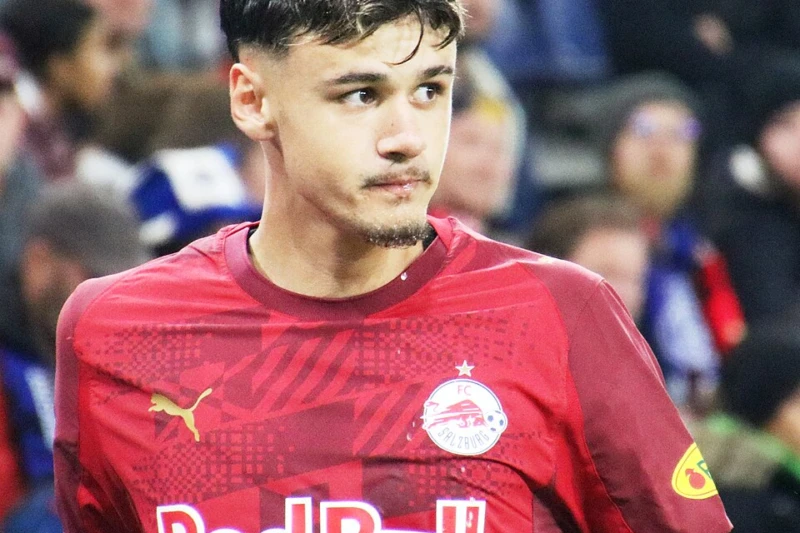
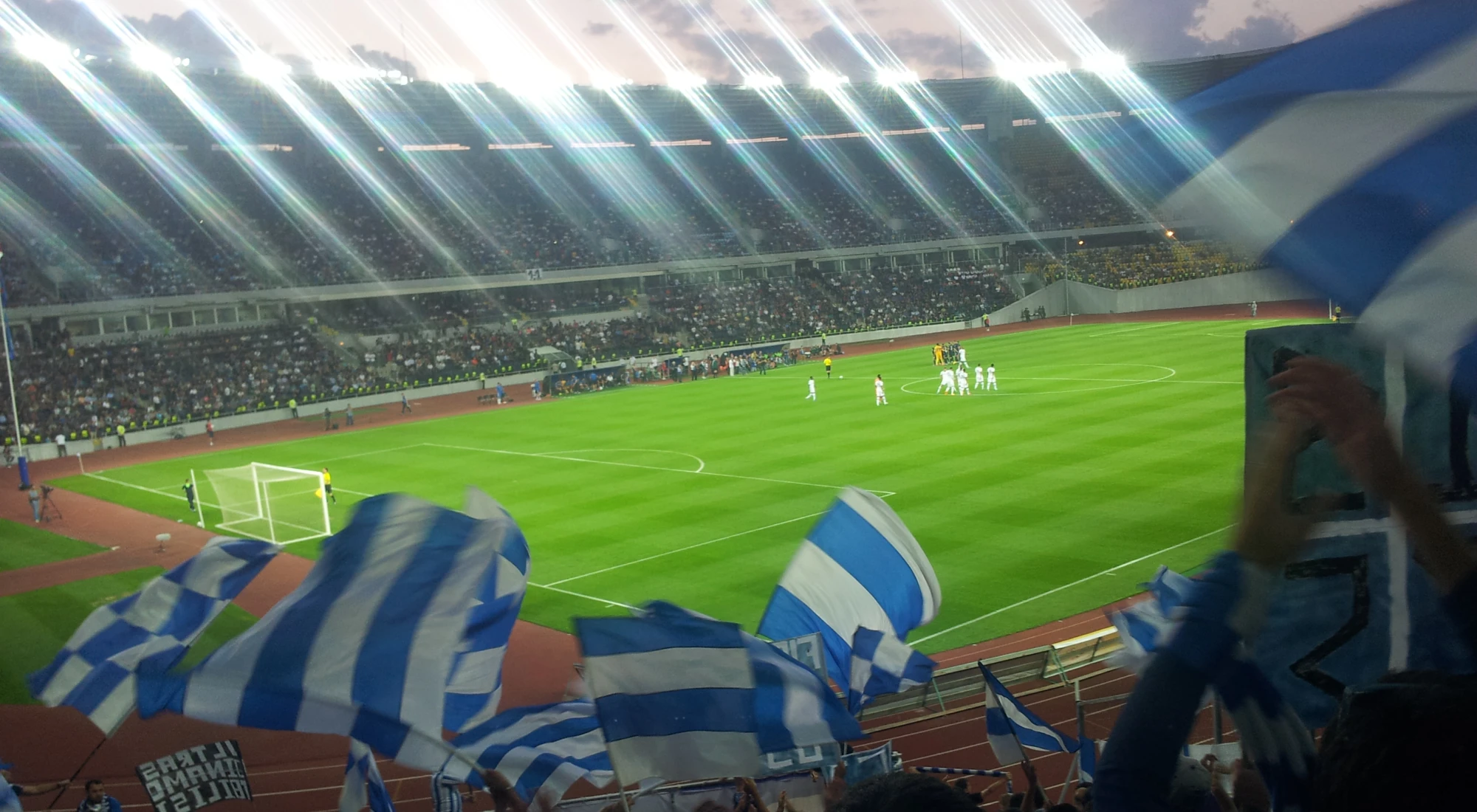

At just 17 years of age, Andria Bartishvili has already begun attracting the attention of some of Europe’s biggest clubs. A product of Dinamo Tbilisi’s academy, the young Georgian has progressed rapidly through both club and international football, representing Georgia’s Under-21 side despite his younger status. For a nation that has recently emerged as one of European football’s most intriguing talent factories, comparisons to Khvicha Kvaratskhelia have inevitably followed.
It is what lies beneath these comparisons, however, that is most interesting.
Bartishvili should not be viewed as simply the latest Georgian winger to emerge from an increasingly productive footballing pipeline. Instead, he is a technically accomplished, attack-minded wide player whose game is built upon directness, conviction and an unwavering desire to move his team forward. Comfortable operating on either flank or in an advanced midfield role, he possesses the versatility increasingly demanded of modern attacking players.
However, it is the manner in which he approaches the game that immediately stands out. Some young attackers are content to circulate possession before waiting for the right moment to become involved.
Bartishvili appears to think differently.
Every time he receives possession, his instinct is to turn, attack space and engage the defender in front of him. It is an aggressive mentality underpinned by impressive technical quality, one that has quickly established him as one of the most exciting young prospects to emerge from Georgian football in recent years.
Every action feels purposeful, never a movement wasted. Whether collecting possession with his back to goal, receiving in transition or isolating a full-back in wide areas, his immediate instinct is to drive forward rather than recycle possession. He plays with an aggressive mentality, constantly looking to commit defenders and force the game towards the opposition’s penalty area.
What makes that approach particularly effective is its efficiency. Bartishvili is not a winger who relies on elaborate flair or tricks to get the better of his fullback. Rather, every body feint, change of direction and burst of acceleration serves a clear objective: creating separation, progressing the attack and placing the defence under immediate pressure. His technical quality allows him to play with freedom, but there is rarely anything wasteful about the way he uses it.
Standing at approximately 5’8”, Bartishvili combines a low centre of gravity with impressive balance and acceleration, making him difficult to dispossess once he begins carrying the ball. Much like Kvicha Kvaratskhelia, he is comfortable on either foot, allowing him to change direction sharply without sacrificing momentum, while his natural strength allows him to continue driving forward through contact. It is a physical profile that complements, rather than defines, his game, giving him the platform to execute the aggressive style that has become one of his most recognisable traits.
Much like his Georgian counterpart, 1v1 situations are where he is most dangerous. Quick changes of direction, subtle body feints and sharp stop-start movements allow him to create separation in tight spaces, while his acceleration and low centre of gravity make him difficult to dispossess once he begins carrying the ball.
Although comparisons should always be treated cautiously, there are stylistic similarities to Arsenal’s Max Dowman in the way he combines balance, close control and physical strength to continue driving forward through contact without sacrificing technical precision.
Rather than the tunnel vision common in prospects his age, once he enters the final third, he regularly lifts his head to assess the next phase of the attack, showing an encouraging awareness of overlapping runners and central passing options. Whether choosing to slip a teammate through on goal or continue carrying possession himself, his decision-making rarely appears rushed. Ultimately, showcasing a level of composure capable of influencing attacks in multiple ways, rather than his individual brilliance alone.
Like most his age, however, there is still room for growth. Currently, he remains in the early stages of his development, with many of the questions surrounding his long-term ceiling impossible to answer until he is consistently tested against Europe’s elite.
Youth football inevitably affords attackers more time and space in possession than they will encounter at senior level, particularly within Europe’s top leagues. Whether Bartishvili can reproduce the same conviction against faster, stronger and more tactically disciplined defenders is a question with an answer that has not yet been written.
That uncertainty, however, does not resemble scepticism. Every highly rated academy prospect faces the same transition. Regardless of reputation or potential, Bartishvili has already demonstrated many of the technical and psychological traits associated with elite wide players.
Arsenal, Liverpool and Paris FC stand out as the clubs with the most outspoken interest in the player. Regardless of Bartishavilli and his representatives, the challenge will be demonstrating that the qualities that have hailed him praise in Georgia can withstand the greater intensity and tactical insight of elite senior football.