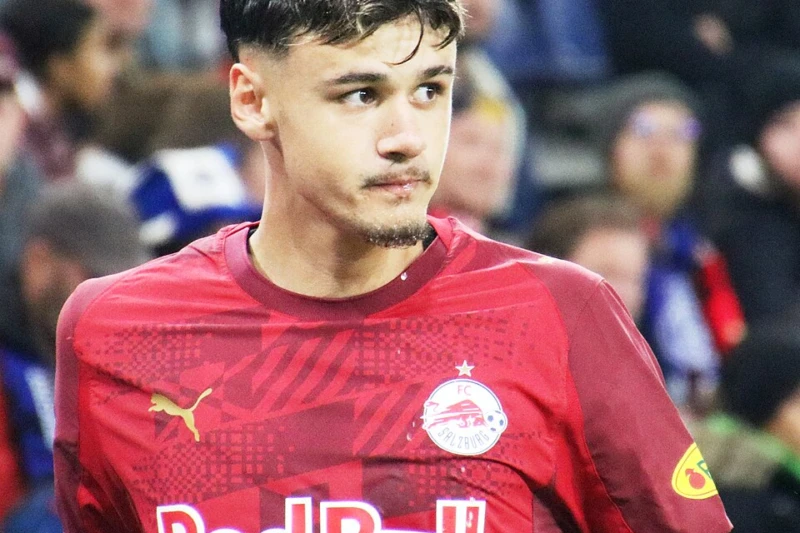
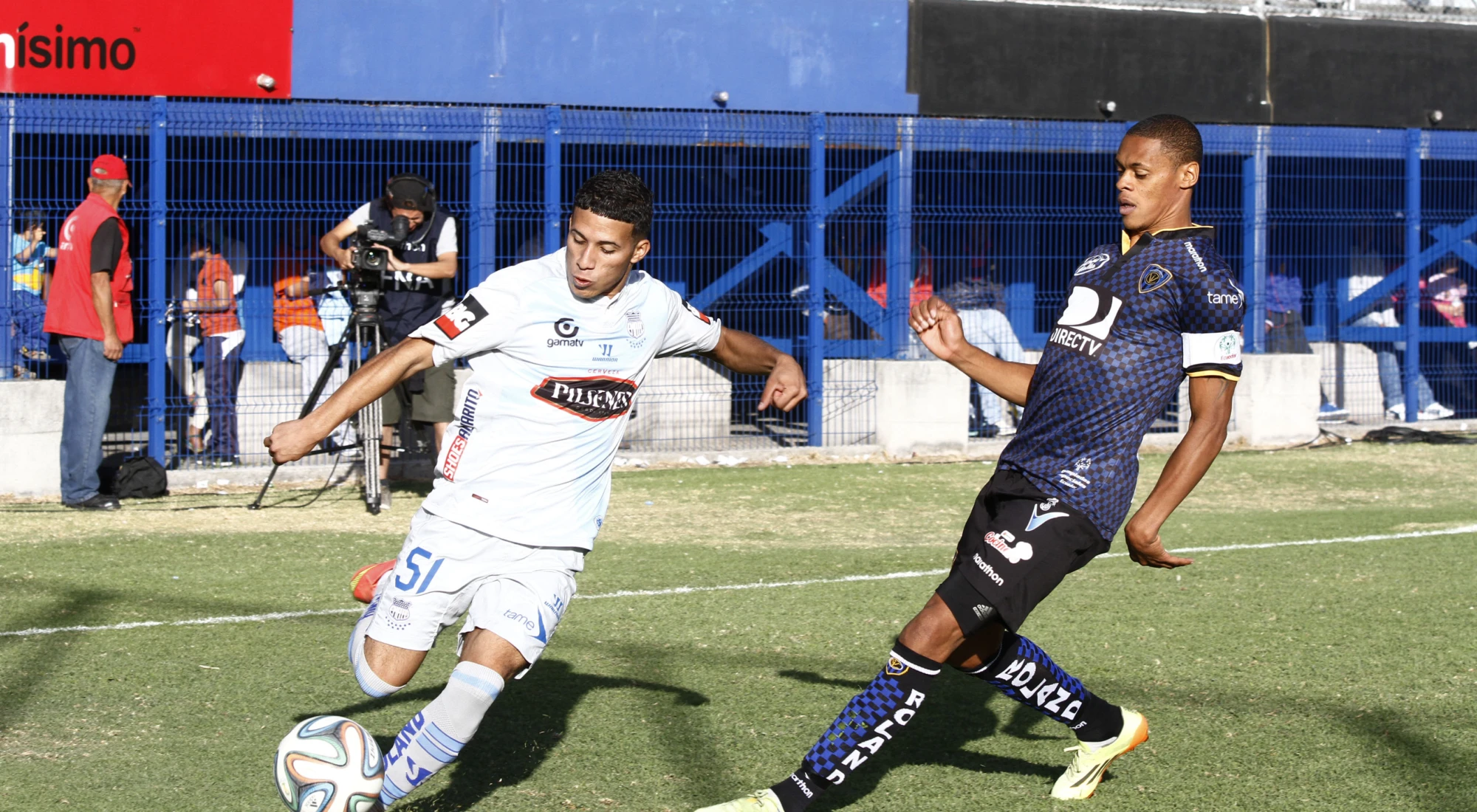

For many football supporters outside South America, Edwin and Holger Quintero were relatively unknown names until Arsenal secured agreements to bring the Ecuadorian twins to north London upon their 18th birthdays. Within Ecuador, however, the pair have long been regarded as two of the country’s brightest emerging talents.
Graduates of Independiente del Valle’s renowned academy, Edwin and Holger have progressed together through both club and international youth football, representing Ecuador at Under-17 level while developing within one of the continent’s most respected talent pathways.
Although often spoken about as a pair, their footballing identities are markedly different.
Often likened to Neymar and Angel Di Maria, Edwin is a direct, explosive wide forward whose game is built around pace, dribbling and attacking defenders in isolation. Holger, by contrast, is a technically refined attacking midfielder who thrives through intelligent movement, close control and progressive passing.
At just 16 years of age, both remain far from the finished article. Physical development, tactical refinement and the transition into senior football will ultimately determine their ceilings. What is already evident, however, is that Arsenal have invested in two players whose talent extends well beyond the novelty of being twins.
Despite sharing almost every step of their footballing journey, the Quintero twins interpret the game through two very different lenses. Edwin is instinctive and expressive, constantly looking to beat his fullback. Holger, meanwhile, is more methodical, preferring to dictate attacks through positioning, tempo and intelligent ball progression. Both are technically gifted, both thrive in possession and both possess the confidence to demand the ball under pressure. It is the application of those qualities, however, that separates them. One seeks to destabilise a defence through chaos; the other through control.
Holger’s most impressive attribute is his relationship with the ball under pressure. Receiving possession rarely appears rushed, even in congested central areas, with an excellent first touch consistently creating the separation required to evade an opponent or open a new passing lane. Comfortable using either foot, he manipulates the ball confidently across his body and possesses the close control required to glide through tight spaces without sacrificing awareness of his surroundings.
His understanding of space is equally impressive. Holger scans regularly before receiving, allowing him to play on the half-turn and progress attacks with minimal touches. Rather than forcing ambitious passes at every opportunity, he demonstrates an encouraging appreciation of tempo, recognising when to accelerate possession through line-breaking passes and when to recycle the ball to maintain control. It is a maturity that gives his game a composed, almost effortless quality.
Physically, Holger appears slightly more developed than his brother. A compact frame, lower centre of gravity and excellent balance allow him to protect possession well despite his age, frequently riding challenges before emerging with the ball still under control. Comparisons to players such as Kobbie Mainoo or Désiré Doué stem less from stylistic similarities and more from the way he uses his body to manipulate pressure and retain possession in crowded midfield areas.
Whereas, Edwin’s game is built on fearless confrontation, embodying a philosophy often echoed by Thierry Henry: regardless of the tactics or system, football eventually boils down to whether you can beat the player standing in front of you.
Standing at around 5’8”, he possesses an explosive athletic profile, combining rapid acceleration with an impressive sprint engine that allows him to remain a threat throughout ninety minutes. Yet it is his natural flair that makes him such a difficult player to contain. Exceptionally comfortable in 1v1 situations, he thrives on deception, repeatedly using stop-start movements, body feints, fake shots and sharp swivels to unbalance defenders before accelerating into the space they leave behind.
While his dribbling naturally attracts the eye, Edwin’s vision is equally impressive. After drawing defenders towards him, he regularly identifies runners in behind and has the technical quality to find them with well-weighted passes. Stylistically, there are shades of a young Neymar and Riyad Mahrez in the way Edwin approaches the game. He is an instinctive footballer who appears to view every isolated duel as an opportunity rather than an obstacle, carrying the ball with confidence and an obvious desire to entertain.
Like any two 16-year-olds, neither Edwin nor Holger are without areas for development. Standing at around 5’8”, both currently lack the physical presence to consistently dominate aerial duels, although they compensate well through balance, agility and technical security.
The more obvious area for refinement lies in their decision-making. Edwin can occasionally prolong attacking situations in pursuit of one more dribble, while Holger is sometimes guilty of forcing an ambitious pass when a simpler option would suffice. Neither tendency is unusual at their age. Rather, they reflect two technically gifted footballers encouraged to play with freedom. With continued coaching and exposure to Hale End’s development environment, those decisions should naturally become more measured without diminishing the qualities that make both players so exciting.